
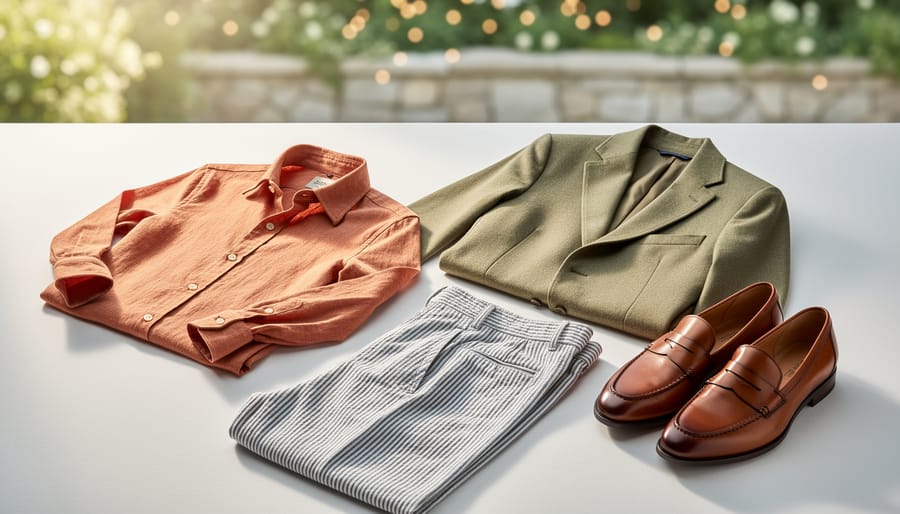
What Actually Works in Men’s Summer Fashion for 2026
Summer dressing separates the men who understand fabric technology from those still sweating through cotton basics. The difference between looking sharp at an outdoor wedding in July and arriving drenched comes down to materials science, not just aesthetics.
Start with natural performance fabrics that actually breathe. Linen remains unmatched for heat management, but the 2026 iterations have solved the wrinkle problem through tighter weaves and linen-cotton blends that maintain structure. Tropical wool, despite its name, works brilliantly in warm conditions because the loose weave allows air circulation while the fiber naturally wicks moisture. Seersucker has moved beyond its Southern preppy associations into contemporary cuts that work for business casual environments.
Your summer wardrobe needs architectural thinking, not just lighter colors. The fit matters more in warm weather because tight clothing traps heat and restricts airflow. Structured garments with slight ease through the chest and a clean drape accomplish what slim fits cannot: they create air pockets that facilitate cooling while maintaining a polished silhouette. This applies equally to shirts, trousers, and unstructured jackets designed for temperatures above 80 degrees.
Color strategy goes beyond navy and khaki. The European approach to summer dressing embraces saturated earth tones, dusty pastels, and textured neutrals that photograph well and pair easily. Terracotta, sage, and stone blue offer sophistication without the corporate monotony of traditional business colors.
The real challenge isn’t assembling individual pieces. It’s building a system where everything works together across contexts, from weekend casual to dressed-up evening events, without requiring a massive wardrobe investment or compromising comfort for appearance.
The 2026 Summer Fashion Landscape: What’s Actually Shifting
The shifts that matter this summer have less to do with hemlines and more to do with function. What we’re seeing in 2026 is not another wave of disposable trends but rather a fundamental recalibration toward pieces that actually perform under real-world conditions while maintaining visual sophistication. GQ’s 2026 predictions signal this clearly: the boundary between athletic wear and refined casual has effectively dissolved, replaced by a hybrid aesthetic that prioritizes adaptability over rigid category definitions.
The most substantive change is the industry’s embrace of performance fabrics in traditionally dressy silhouettes. We’re talking about dress shirts cut from moisture-wicking blends that look like cotton poplin but breathe like technical athletic gear. Trousers with four-way stretch that maintain a clean drape. Blazers constructed with hidden mesh panels at pressure points. This is not athleisure rebranded, it’s a pragmatic response to the way modern men actually live: moving between climates, contexts, and activities without the luxury of multiple wardrobe changes.
The color palette has opened up considerably, but in ways grounded in wearability rather than Instagram novelty. Earthy terracottas, dusty olives, and washed-out blues dominate, offering visual interest without the high-maintenance baggage of stark whites or the monotony of all-black summer wardrobes. These tones work because they hide sweat, tolerate wrinkles, and pair back easily with existing pieces.
Fit has stabilized after years of oscillating extremes. The prevailing silhouette sits comfortably between the skinny excesses of the 2010s and the exaggerated volumes that briefly dominated 2024-2025. Trousers have a straight, slightly relaxed leg. Shirts offer room through the chest and shoulders without ballooning. It’s a return to proportion that flatters actual body types rather than serving as a runway provocation.
What ties these shifts together is a shared emphasis on versatility. The pieces gaining traction in 2026 are those that bridge multiple settings with minimal styling effort, pieces that travel well, recover quickly, and look intentional without demanding constant attention. This is fashion catching up to how men over thirty actually dress when they stop performing for an algorithm.
The Jersey Renaissance: Athletic Wear Meets Everyday Style
Choosing Quality Over Logos
The logo on the chest matters less than what happens when you wash the piece for the tenth time. A $100 Arsenal jersey example from Adidas holds its shape and color because the fabric blend and construction quality justify the price. The $30 knockoff from a marketplace seller falls apart by August.
Start with the weight test. Hold the jersey up to light. Quality athletic pieces have a consistent weave density without thin spots or loose threads. The fabric should have enough heft to drape properly, not cling like athletic underwear. Performance polyester blends designed for actual sport recover better from sweat and washing than basic poly-cotton mixes marketed as “athletic wear.”
Check the stitching at stress points: shoulder seams, armholes, hem. Double-stitched or reinforced seams signal a garment built to move and last. Flatlock seams lie flat against skin instead of creating the raised ridge that chafes after an hour of wear. These construction details separate pieces you’ll reach for in three summers from those relegated to the gym bag by September.
Fit trumps team affiliation. An oversized jersey sized down still looks like you borrowed it from someone taller. Athletic pieces for everyday wear should fit through the shoulders without swimming through the torso. If you need to knot the hem or constantly adjust the neckline, the piece fails regardless of the brand stitched across it.
The versatility question is simple: can you wear it somewhere beyond the stadium and a barbecue? A well-cut jersey in neutral team colors layers under an unstructured blazer or pairs with classic suit accessories like a quality watch without looking confused. Neon logos and sponsorship patches limit where the piece works, which means you wear it less, which makes the cost per wear climb regardless of the original price.
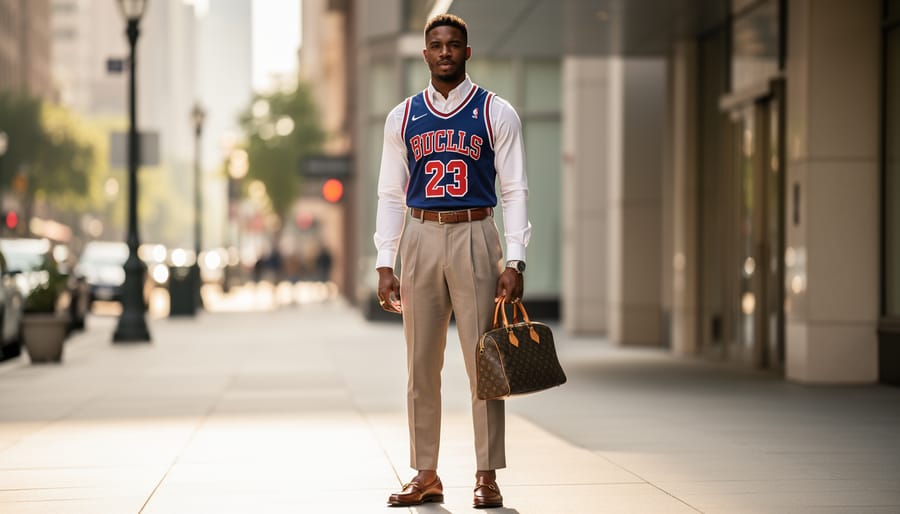
When Athletic Works (and When It Doesn’t)
Athletic pieces work in summer when they’re contextual, not central. A quality jersey can anchor a weekend outfit, paired with tailored shorts and leather sneakers for a brewery or daytime event, but it fails the moment you try to force it into situations that demand a collar. The difference is knowing when athletic pieces enhance your personal style versus when they’re just lazy.
The line is clearer than you think: athletic-influenced pieces belong in genuinely casual environments. Outdoor summer events, weekend travel, casual dinners at relaxed venues. They don’t belong anywhere you’d consider business casual, most date settings beyond the third or fourth, or situations where you’re meeting someone’s parents. If you’re questioning whether it works, it doesn’t.
Context also means understanding your build and age. The Arsenal FC 26/27 Home Jersey might look sharp on a fit 28-year-old with the physique to carry it; the same piece on a 45-year-old with a different body type can read as regression rather than style. This isn’t about rules, it’s about self-awareness.
The smarter move is treating athletic pieces as accents within a more refined wardrobe rather than building around them. One well-chosen jersey that means something to you, your actual team, a city you lived in, worn occasionally beats a rotation of logo-heavy athletic wear that signals you’ve outsourced your style to sports brands.
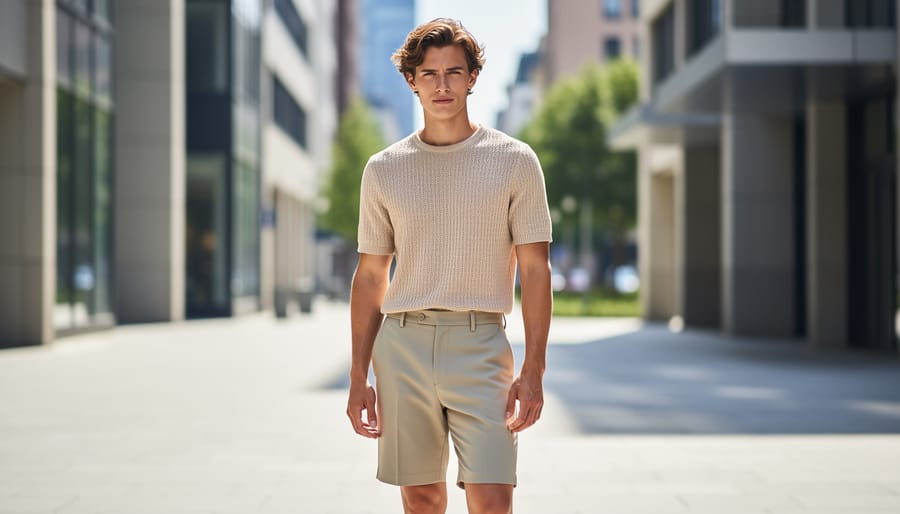
Fabric Intelligence: What You Should Actually Wear When It’s Hot
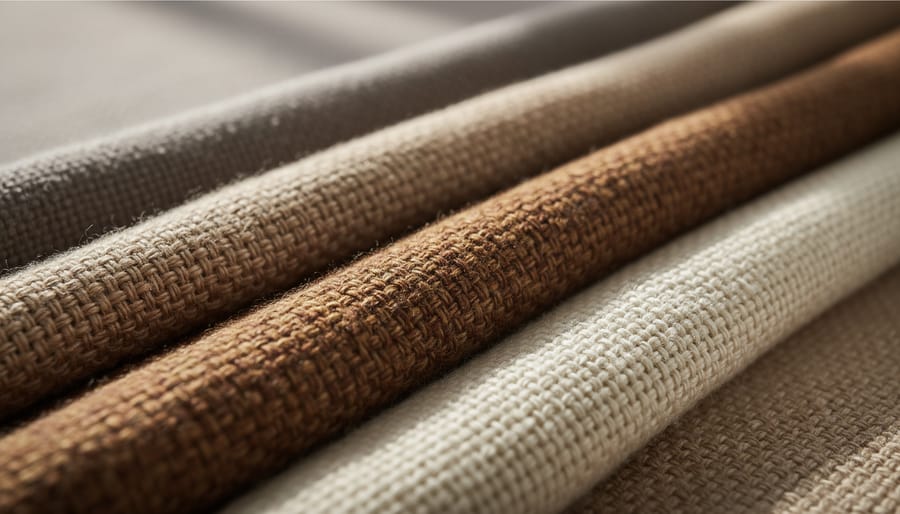
The truth about summer fabrics isn’t found in the endless linen evangelism that dominates style advice. While linen has its place, effective warm-weather dressing requires understanding how weave structure, fiber composition, and fabric weight interact with your actual routine. Most men end up uncomfortable because they’ve bought into fabric myths rather than choosing materials that match their lifestyle.
Start with weave over fiber. A tight poplin cotton shirt, despite being “natural,” traps more heat than a well-constructed synthetic blend with an open weave. The spaces between yarns matter more than whether the label says cotton or polyester. Look for basket weaves, open seersucker constructions, or tropical-weight plain weaves that create air channels against your skin. These structural choices determine breathability far more than fiber alone.
| Fabric Type | Breathability | Formality Level | Care | Best Use |
|---|---|---|---|---|
| Tropical Wool (8-9 oz) | Excellent | High | Dry clean recommended | Professional settings, travel |
| Chambray | Very Good | Medium | Machine wash cold | Smart casual, everyday |
| Performance Linen Blends | Excellent | Medium | Machine wash, low heat | Casual to refined casual |
| Mesh Knit Synthetics | Outstanding | Low to Medium | Machine wash, hang dry | Active, extreme heat |
Performance fabrics deserve consideration beyond athletic contexts. Modern moisture-wicking synthetics now come in refined silhouettes that work in business casual environments. The key is fit and construction rather than obvious technical detailing. A well-cut polo in a synthetic blend outperforms pure cotton in heat and humidity while maintaining a polished appearance. Making designer fashion affordable often means investing in these performance pieces that outlast cheaper natural fiber alternatives.
Fabric weight remains misunderstood. Lighter isn’t always cooler. A 4-ounce linen shirt wrinkles into uselessness within an hour, while a structured 8-ounce tropical wool maintains its shape and actually feels cooler through better drape and air circulation. Aim for fabrics heavy enough to hold structure but light enough to move with you. In shirting, 3.5 to 5 ounces works for most situations. In trousers, 8 to 10 ounces provides durability without bulk.
The real test isn’t how a fabric performs standing still in an air-conditioned store. Consider how it handles a 15-minute walk in direct sun, how it recovers from sitting in a car, whether it shows sweat immediately or wicks it away. These practical metrics matter more than any fiber purity claim.
The Summer Capsule That Actually Makes Sense
A functional summer wardrobe isn’t about owning everything. It’s about owning the right things that actually work together when you’re standing in front of your closet at 7 a.m., already sweating.
Start with three pairs of shorts in different weights and contexts: one tailored pair in a neutral fabric for situations that demand polish, one casual cotton or linen pair for weekends, and one technical short that can handle physical activity without looking like gym gear. Avoid the temptation to collect five variations of the same casual short. That’s not versatility, it’s redundancy.
For tops, you need fewer pieces than you think, but they need to earn their space. Two quality polo shirts in breathable fabrics give you instant put-together credibility for casual dinners, weekend events, or smart-casual work environments. Three well-fitted tees in complementary neutrals provide your base layer for everything else. Add one lightweight button-down shirt in a performance fabric, something that breathes, travels well, and doesn’t require ironing. This single piece bridges the gap between casual and refined better than a drawer full of printed resort shirts ever will.
The jersey trend emerging in 2026 can slot into this capsule if you choose thoughtfully. One quality piece with clean design serves as your casual statement item. It works for weekend errands, outdoor events, and social gatherings where showing some personality matters more than formality.
Footwear determines whether this capsule actually functions. One pair of clean leather sneakers handles 70% of summer situations. One pair of minimal sandals that don’t scream “I’m on vacation” covers heat and casual contexts. If your lifestyle includes occasions that demand more polish, add one pair of summer-weight loafers. Three pairs total. That’s it.
The goal is to develop a signature style built on pieces that work in multiple combinations rather than collecting items that only function in one specific scenario. When every piece in your summer wardrobe can pair with at least three other items, you’ve built something sustainable.
This framework assumes you’re dressing for real life, not an Instagram grid. It accommodates variability without forcing you to own separate wardrobes for every possible summer situation. Most importantly, it lets you get dressed without analysis paralysis, because the best summer wardrobe is one you’ll actually use.
Color and Pattern Without Looking Like a Tourist
The fear of bright colors and bold patterns has less to do with the items themselves and more to do with proportion and intent. A coral linen shirt doesn’t automatically broadcast tourist; pairing it with cargo shorts, white sneakers, and a camera strap does. The sophistication lies in treating summer color as an accent rather than a costume.
Start with one statement piece per outfit. A terracotta polo works with neutral chino shorts and minimal leather sandals. A subtle madras check shirt pairs well with white denim and understated loafers. The moment you stack pattern on pattern or introduce multiple competing bright tones, you cross from intentional to trying too hard. This restraint applies whether you’re layering best men’s fragrances or building an outfit: one focal point, everything else supporting.
Patterns that age well share a common trait: they’re rooted in menswear tradition rather than seasonal novelty. Classic Bengal stripes, subdued windowpane checks, and simple geometric prints telegraph confidence because they’ve proven their longevity. Contrast that with novelty prints featuring tropical fruits or ironic slogans, which rarely survive a single season without feeling dated. If a pattern needs explanation, it’s probably not doing the work you think it is.
Color depth matters more than color choice. Dusty sage, burnt sienna, and faded navy carry summer warmth without the visual volume of neon lime or electric blue. These muted tones photograph well, mix easily with existing wardrobe staples, and don’t demand constant attention. They also transition from lunch to evening without requiring a complete outfit change.
The test is simple: would you wear this piece in September with slightly different styling? If the answer’s no because it screams beach vacation, you’re looking at a prop rather than clothing. Summer doesn’t require a personality transplant; it just needs fabric that breathes and colors that don’t drain your face under direct sun.
Where Summer Fashion Is Heading: Insights from 2026 Industry Events
Industry events in August and late June offer tangible signals about where men’s summer fashion is moving, beyond the abstractions of trend forecasting. Project Fashion Events, running August 10-12, 2026, typically brings together buyers, designers, and manufacturers to preview what will reach retail floors in subsequent seasons. The event’s emphasis on contemporary and advanced contemporary categories suggests the industry is betting on elevated basics rather than disposable trend pieces, a shift toward garments that justify higher price points through construction and versatility rather than novelty.
The Canada Lifestyle Exhibition, scheduled for June 19-20, 2026 in Calgary, presents a different lens: consumer-facing fashion shows and exhibitions that reveal what resonates with actual buyers rather than industry insiders. These dual perspectives matter because they highlight the gap between what designers propose and what men actually purchase. The exhibition format, combining runway presentations with direct-to-consumer sales, indicates growing emphasis on immediate wearability over aspirational concepts.
Both events point toward a practical turn in men’s fashion. The runway-to-retail compression we’re seeing means fewer pieces designed purely for editorial impact and more attention to fabrics that perform in real summer conditions. This aligns with broader lifestyle shifts toward grooming routines that prioritize function, the same pragmatism that leads men to reduce shaving irritation through better products rather than elaborate rituals applies to wardrobe choices that deliver comfort without sacrificing presentation.
The trajectory is clear: summer fashion is moving away from seasonal novelty toward year-round relevance, with pieces that transition across contexts and climates rather than serving a single narrow purpose.
The difference between men who dress well in summer and those who just dress for it comes down to priorities. Chasing trends means starting over each season. Understanding fabric, fit, and context means building a wardrobe that actually works.
The pieces worth investing in are those that serve multiple purposes without compromise. A well-constructed linen shirt works at a backyard gathering and a casual Friday. Quality lightweight chinos transition from afternoon meetings to evening drinks. The right pair of canvas sneakers handles a weekend trip and a relaxed dinner. These aren’t exciting purchases, but they’re the ones you’ll reach for repeatedly.
Summer style in 2026 rewards intentionality over volume. You don’t need fifteen graphic tees or three versions of the same short. You need versatile pieces that fit properly, fabrics that perform in heat, and the judgment to know what works where. The athletic influences, performance materials, and refined casual aesthetics we’ve discussed all support this approach, but they’re tools, not mandates.
Your summer wardrobe should reflect how you actually live, not how fashion editorials suggest you should. That’s the practice of mens summer fashion that endures beyond any single season.