
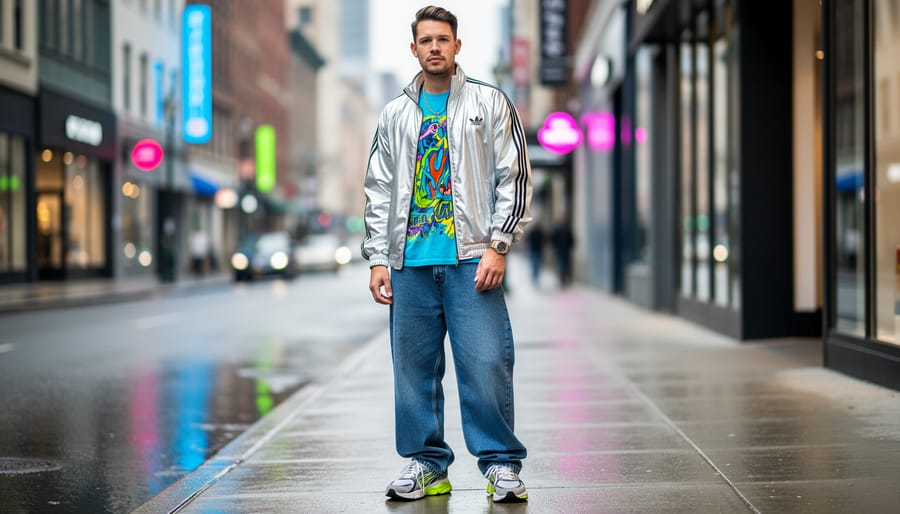
What Is Y2K Fashion for Men (and How Does It Work)?
Y2K fashion for men refers to the distinctive aesthetic that dominated the late 1990s and early 2000s, characterized by oversized silhouettes, tech-inspired materials, bold logos, and a futuristic optimism that now reads as nostalgic. Think baggy jeans, track jackets, metallic fabrics, and graphic tees emblazoned with brands that screamed rather than whispered.
The style has experienced a significant resurgence, but understanding how to wear it in 2026 requires separating the genuinely useful elements from the costume-party excess. This isn’t about recreating your older brother’s 2001 wardrobe wholesale. The appeal lies in selective adoption: taking the relaxed proportions, sporty attitude, and playful color palette while filtering out the aspects that aged poorly.
What makes Y2K relevant today is its departure from the slim, minimalist aesthetic that defined much of the 2010s. As fashion has relaxed and comfort has become non-negotiable, the looser fits and athletic influences of Y2K offer a blueprint that feels both fresh and familiar. The trick is calibration. Wear the trend too literally and you risk looking like you’re headed to a themed party. Integrate it thoughtfully and you gain access to a more relaxed, personality-driven approach to dressing.
This guide breaks down what defines Y2K style in menswear, identifies its core components, explains how the aesthetic functions as a system rather than a collection of random pieces, and provides practical direction on incorporating these references into a wardrobe that works for adult life in 2026. You’ll learn which elements translate well, which require careful handling, and how to balance nostalgia with contemporary sensibility.
Defining Y2K Fashion: The Millennium Aesthetic
Y2K fashion represents the optimistic, tech-obsessed aesthetic that dominated menswear from roughly 1997 to 2003. Born at the intersection of millennial anxiety and digital utopianism, this style celebrated the future with shiny fabrics, futuristic silhouettes, and a boundless confidence that technology would reshape everything, including how men dressed.
The aesthetic emerged during a unique cultural moment. Personal computers were becoming household essentials, mobile phones were shrinking into pocket-size status symbols, and the internet promised to connect humanity in unprecedented ways. Fashion responded by embracing metallics, reflective materials, and streamlined shapes that seemed borrowed from science fiction. Designers and streetwear brands alike imagined a sleek, cybernetic future, translating that vision into clothing that felt simultaneously alien and wearable.
- Futurism
- Design philosophy emphasizing forward-looking aesthetics, typically expressed through metallic finishes, geometric shapes, and tech-inspired details that suggested a computerized tomorrow.
- Cyber-Grunge
- The fusion of 90s grunge rebellion with emerging digital culture, distressed textures meeting circuit-board graphics and utilitarian pockets designed for gadgets.
- Tech-Wear Influences
- Military and outdoor gear reimagined through a technological lens, featuring modular designs, visible zippers, reflective strips, and fabrics marketed with space-age properties.
- Millennium Bug Culture
- The collective fascination and mild paranoia surrounding Y2K itself, which manifested in fashion as both celebration of the new millennium and ironic commentary on technological dependence.
Pop culture accelerated the trend’s reach. Boy bands wore coordinated shiny tracksuits and frosted-tip hairstyles. Hip-hop artists championed oversized jerseys, baggy carpenter jeans, and chunky sneakers. Film and music videos depicted glossy, neon-lit futures where everyone dressed like they’d stepped off a spaceship. The Matrix codified black leather and slim sunglasses as the uniform of digital cool.
This wasn’t just fashion following technology, it was clothing as cultural optimism made visible. Y2K style captured a rare moment when society genuinely believed the future would be better, brighter, and infinitely more connected. That confidence, perhaps naively earnest by today’s standards, gave the aesthetic its distinctive swagger.
How Y2K Fashion Works: The Core Elements
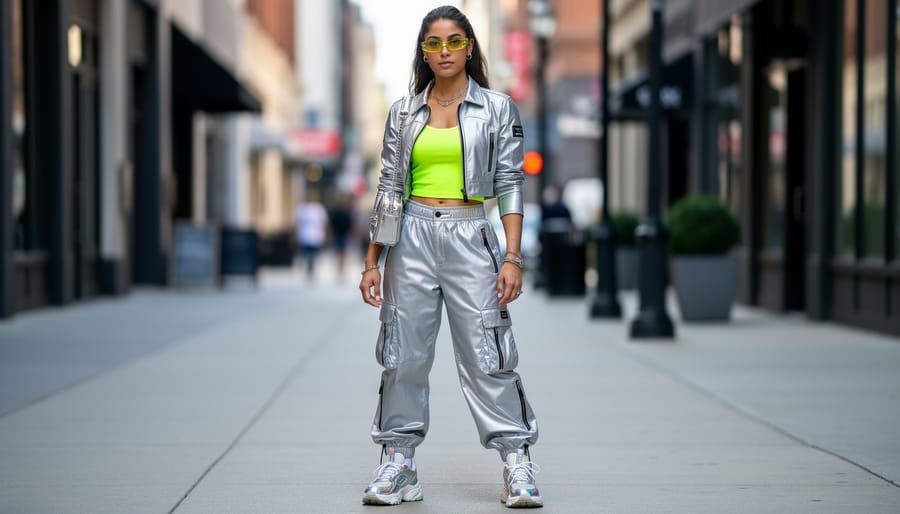
Y2K fashion operates on a deliberate collision of opposites: futuristic optimism meets athletic practicality, slick synthetic fabrics sit alongside distressed denim, and loud graphics contrast with minimalist metallics. The aesthetic doesn’t follow one rule but rather thrives on juxtaposition. At its core, Y2K style for men is built around silhouette exaggeration, pieces are either deliberately oversized (cargo pants, puffer jackets, wide-leg jeans) or unexpectedly fitted (slim track jackets, cropped tees). This size play creates visual tension, making outfits feel dynamic rather than static.
Material choice drives much of Y2K’s character. The era loved anything that looked high-tech or performance-oriented: nylon shell fabrics, mesh panels, reflective strips, shiny polyester, and vinyl accents. These materials carried an implicit message about progress and modernity, even when used on everyday streetwear. Denim remained central but shifted toward lighter washes, baggy cuts, and visible distressing that felt casual rather than polished. The tactile variety within a single outfit, smooth against rough, matte beside shine, gave Y2K looks their signature layered complexity.
Color operates in extremes. One camp favors chrome effects, silver tones, white, black, and icy blues that evoke computer screens and spacecraft interiors. The other embraces saturated primaries (electric blue, fire-engine red, lime green) or soft pastels that borrowed from sportswear and early digital interfaces. Patterns lean graphic: pixelated prints, tribal-inspired motifs, camo in unexpected colors, and logos sized large enough to read from across a room. These weren’t subtle nods but full declarations of aesthetic intent.
The philosophy underneath all this is accessibility through boldness. Y2K wasn’t about tailoring perfection or expensive materials. It celebrated affordable, mass-produced pieces that anyone could wear but styled with enough confidence to own the look. Statement items, a metallic puffer, graphic tee with a Y2K-era logo, or carpenter jeans with excessive pockets, anchor the outfit, while simpler pieces (plain tees, basic sneakers, minimal accessories) keep it wearable. This balance prevents costumery. You’re referencing an era, not replicating it entirely, which is precisely why Y2K translates into 2026 wardrobes without feeling forced.
Types and Components of Y2K Men’s Fashion
Signature Garments and Silhouettes
Y2K men’s fashion centers on a deliberate rejection of the slim, tailored silhouettes that dominated the late 2010s. The core philosophy is volume tempered with intentionality, garments are oversized or relaxed, but the proportions follow a logic that distinguishes them from shapeless dressing.
Cargo pants anchor the Y2K aesthetic with their unmistakable utility pockets and loose, straight leg. The authentic versions sit low on the hips and break heavily at the ankle, often in ripstop nylon or heavyweight cotton twill. Modern interpretations retain the pocket detailing but may taper slightly below the knee to avoid dragging on the ground, a practical concession that doesn’t sacrifice the silhouette’s essence.
Baggy jeans follow a similar principle: mid-rise or low-rise waists with substantial leg openings, typically 20 inches or wider at the hem. The fit through the thigh is generous without being clownish, and the denim itself tends toward medium or dark washes rather than the distressed treatments that came later. These jeans work because they create negative space around the legs, which balances the visual weight of chunkier footwear.
Track jackets in technical fabrics, think tricot polyester with contrasting stripes down the sleeves, serve as the quintessential Y2K layering piece. They’re cropped shorter than contemporary bombers, hitting at the natural waist or just below, and the slim fit through the torso contrasts deliberately with the volume elsewhere in the outfit.
Essential Y2K pieces include:
- Mesh jerseys in basketball or football styles, worn as outerwear over long-sleeve tees
- Graphic tees featuring circuit-board prints, metallic logos, or early internet iconography
- Slim-fit leather jackets in black or deep burgundy with minimal hardware
- Oversized puffer jackets and parkas, often in chrome silver or primary colors
- Zip-up fleeces in technical fabrics with retro sport branding
The proportional balance matters more than individual pieces. Y2K silhouettes mix fitted tops with voluminous bottoms, or layer oversized outer layers over streamlined bases. A slim leather jacket over a graphic tee with cargo pants creates tension between tight and loose that defines the era’s visual language. Avoid making everything oversized simultaneously, that collapses into formlessness rather than intentional Y2K styling.
Materials and Textures
Y2K fashion’s material palette reads like a love letter to technological optimism, surfaces that caught light, fabrics that looked engineered rather than natural. The era’s signature look relied heavily on shiny synthetics: polyester track jackets with a subtle sheen, nylon windbreakers that reflected streetlights, and satin-finish bombers that broadcast futurism. These weren’t just practical choices but deliberate aesthetic signals, suggesting a world where everything could be improved through technology.
Metallics dominated the more fashion-forward expressions. Silver puffer jackets, chrome-effect prints on tees, and gunmetal hardware created that distinctive space-age vibe. Technical nylon, the kind used in parachutes and early sportswear, became a style statement rather than purely functional fabric, often appearing in cargo pants and utility vests with multiple pockets and visible stitching.
Denim took on specific character through acid washes, stonewashing, and deliberate distressing that felt industrial rather than vintage. The finish mattered as much as the cut. Mesh inserted into jerseys, shirts, and even trousers added both texture and a hint of athletic functionality, while vinyl accents on jackets and trousers pushed the envelope toward club culture and early streetwear crossover.
The unifying thread across these materials was their rejection of natural, matte textures in favour of surfaces that announced themselves, fabrics that looked forward rather than back.
Color Palettes and Patterns
Y2K men’s fashion embraced a color vocabulary that reflected the era’s simultaneous optimism about the digital future and nostalgia for analog playfulness. The palette was deliberately polarized, either aggressively futuristic or deliberately retro, rarely landing in safe middle territory.
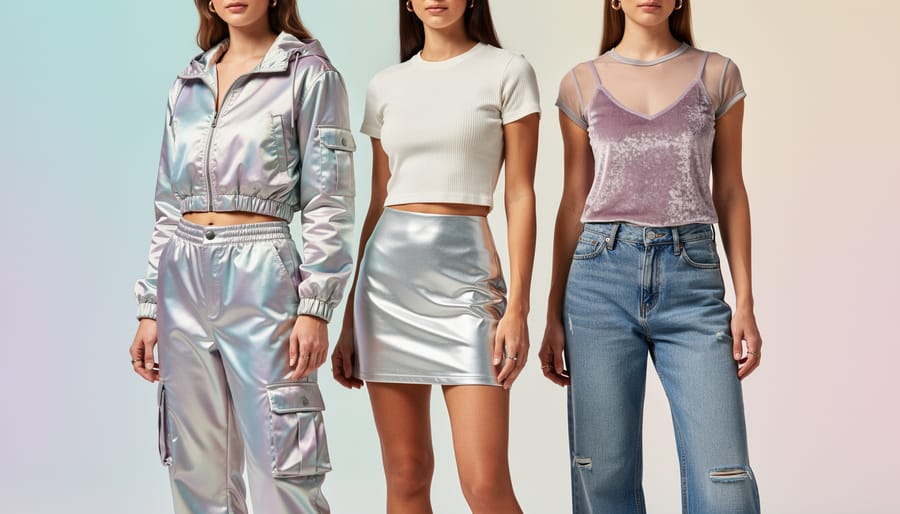
Metallic shades dominated the forward-looking end of the spectrum. Silver, gunmetal gray, and chrome-effect fabrics conveyed a tech-optimistic aesthetic borrowed from sci-fi cinema and early personal computing culture. These reflective tones appeared on everything from puffer jackets to accessories, creating a deliberately synthetic visual language that celebrated artificiality rather than hiding it.
Bright primary colors provided the counterpoint, electric blues, vivid reds, and saturated yellows appeared in blocks and stripes, often combined in high-contrast arrangements that borrowed from sportswear and digital graphics. This wasn’t subtle color work; it was intentionally attention-grabbing.
Pastels offered an unexpected softer dimension, particularly baby blues, mint greens, and lilac tones that nodded to 1980s influences experiencing their own revival within Y2K styling. These lighter shades appeared frequently in knitwear and casual shirts.
Black-and-white combinations maintained constant presence, offering visual relief from the era’s chromatic intensity while supporting the graphic boldness that defined Y2K prints. Speaking of patterns, oversized logos, digital camouflage, pixelated graphics, and geometric designs inspired by early computer interfaces became signature markers, turning garments into walking advertisements for the technological revolution everyone anticipated.
Uses: When and How to Wear Y2K Fashion Today
Streetwear and Casual Settings
Y2K pieces integrate most naturally into streetwear and casual contexts, where their bold aesthetic reads as intentional rather than out of place. The foundation of a wearable Y2K casual look lies in restraint, select one or two statement pieces and anchor them with contemporary basics that keep the outfit grounded in 2026.
Start with a single hero item: cargo pants in a neutral tone, a track jacket with retro paneling, or a graphic tee featuring tech-inspired prints. Pair these with modern essentials, a plain white tee under an oversized zip-up, well-fitted black jeans to offset baggy cargos, or clean minimalist sneakers to balance a loud top half. This prevents the costume effect while letting Y2K elements speak without shouting.
Layering amplifies the Y2K aesthetic without overwhelming it. Try a fitted long-sleeve tee under a mesh jersey, or layer a cropped puffer vest over a hoodie. The key is varying proportions, if you go oversized on top, keep the bottom streamlined, and vice versa. Mix textures deliberately: pair technical nylon with cotton, or shiny fabrics with matte finishes.
Accessories complete the look without dominating it. Consider tinted sunglasses, a beanie, or a crossbody bag in metallics or bright accents. Keep color palettes focused, stick to two or three hues per outfit, using chrome or silver as a neutral rather than a statement. The goal is looking like you dressed yourself in 2026, not like you raided a 2001 music video wardrobe.
Incorporating Y2K Into Smart-Casual Style
The most sophisticated approach to Y2K fashion lies in restraint, selecting one or two period-appropriate elements that elevate rather than dominate your outfit. Smart-casual contexts demand polish, so lean into the aesthetic’s cleaner expressions: slim-fit zip-up track jackets in technical fabrics worn over crisp white shirts, or tailored trousers with subtle metallic threading that catches light without screaming for attention.
Accessories offer the safest entry point. A chunky silver chain bracelet, rectangular sunglasses with colored lenses, or a sleek digital-face watch provides era-appropriate detail without compromising the refinement your setting requires. These pieces signal cultural awareness while maintaining the visual weight balance essential to smart-casual dressing.
Fabric choice matters enormously here. Swap overtly synthetic materials for their premium counterparts, think brushed technical cotton instead of shiny nylon, or a wool-blend cardigan with a subtle sheen rather than full metallics. The texture nods to Y2K’s material vocabulary without the costume effect. A charcoal blazer in a micro-ripstop weave or trousers with a barely-there technical finish bridges both worlds effectively.
The single statement piece principle works reliably: pair one distinctive Y2K item, perhaps a slim leather jacket with minimal hardware or a fine-knit turtleneck in an unexpected silver-grey, with otherwise classic pieces. Dark denim, oxford shoes, and neutral knitwear anchor the look in contemporary sophistication while the focal piece provides personality.
Avoid combining multiple Y2K signifiers in smart-casual settings. Cargo pockets, graphic prints, and bold color blocking belong in casual contexts. Here, subtlety demonstrates confidence, you’re referencing an aesthetic vocabulary, not recreating a 2001 music video.

Y2K Fashion vs. Contemporary Trends: What’s Different Now
The Y2K fashion that’s returned in 2026 isn’t a carbon copy of what men wore two decades ago. It’s evolved, refined, and adapted to fit a fundamentally different menswear landscape.
The original Y2K era embraced excess without apology. Silhouettes ran oversized to the point of drowning the wearer, synthetic fabrics dominated because they looked futuristic rather than because they performed well, and brand logos were often plastered across garments with zero subtlety. Quality took a backseat to novelty. Fast fashion was ascendant, and few questioned the disposability of trend-driven pieces.
Today’s interpretation has matured considerably. Modern Y2K-inspired menswear emphasizes fit precision even when playing with proportion. A wide-leg cargo pant in 2026 is intentionally tailored through the seat and thigh before expanding below the knee, creating structure rather than sloppiness. Technical fabrics now genuinely perform, offering breathability and durability alongside that characteristic sheen. Even graphic tees and statement outerwear come from brands investing in substantial construction and longevity.
The color palettes have softened too. While metallics and chrome effects remain, they appear as accents within otherwise considered outfits rather than head-to-toe statements. Contemporary styling favors one or two Y2K elements integrated with timeless basics, whereas the original era often stacked every trend simultaneously.
Sustainability has fundamentally altered how men approach Y2K revival. Rather than buying cheap reproductions destined for landfills, the current movement prioritizes authentic vintage sourcing, high-quality contemporary pieces designed for longevity, and thoughtful curation over volume. Thrift culture and secondhand markets have legitimized hunting for original Y2K garments, giving them new life instead of manufacturing disposable copies.
The 2026 wearer treats Y2K as a reference point and aesthetic influence, not a rigid costume to replicate. It’s nostalgia filtered through contemporary standards of craftsmanship, fit, and conscious consumption.
Frequently Asked Questions
Adopting Y2K fashion as a mature man raises legitimate questions about execution, appropriateness, and practicality. Here are answers to the most common concerns.
Where can I find Y2K pieces without looking like I raided a costume shop?
Look for contemporary brands reinterpreting Y2K aesthetics with better fit and quality, retailers like ASOS, Urban Outfitters, and Zara offer modern takes on cargo pants and technical fabrics. Vintage and secondhand platforms like Depop, Grailed, and eBay provide authentic pieces, but focus on items in excellent condition and classic silhouettes rather than overtly branded or worn-out garments.
Is Y2K fashion appropriate for men over 30?
Absolutely, provided you approach it with restraint and confidence. Choose one or two Y2K elements per outfit, a cargo pocket detail, metallic accessories, or a technical fabric jacket, and ground them with tailored basics. The key is treating Y2K as a style reference, not a full costume recreation.
Can Y2K pieces work in business-casual environments?
Select elements can work in relaxed professional settings. A well-fitted jacket with subtle metallic threading, sleek pants with cargo-inspired pockets, or minimalist sneakers with retro colorways integrate Y2K touches without compromising polish. Avoid overt graphics, excessive branding, and overly baggy silhouettes in any workplace context.
What are the biggest styling mistakes to avoid?
Don’t combine too many Y2K elements at once, layering baggy jeans, a graphic tee, chunky sneakers, and a metallic jacket reads as costume rather than style. Avoid pieces that look genuinely dated or cheap, and skip anything with excessive visible branding or novelty prints that haven’t aged well.
The most successful approach treats Y2K fashion as a toolkit rather than a uniform. You’re not trying to dress exactly as someone did in 2001, but rather borrowing specific elements that resonate with your personal style and current wardrobe. Start with one statement piece, perhaps cargo pants in a modern cut or a technical jacket with interesting texture, and build around it using your existing basics.
Budget concerns are valid, but Y2K fashion actually offers flexibility across price points. Vintage pieces can be remarkably affordable, though condition varies. Mid-range contemporary brands provide accessible interpretations with consistent sizing and quality. If you’re investing more, prioritize versatile items like well-constructed outerwear or quality denim that reference the era without shouting it.
Y2K fashion offers modern men something rare in today’s menswear landscape: permission to play without sacrificing sophistication. This aesthetic proves you don’t need to choose between referencing the past and dressing for the present. The strength of Y2K lies in its adaptability, you can lean into its bold, maximalist roots with metallic fabrics and oversized silhouettes, or you can cherry-pick subtle elements that simply add texture to an otherwise contemporary wardrobe.
What makes this trend worth exploring in 2026 isn’t nostalgia for its own sake. It’s the aesthetic confidence that comes from mixing eras, materials, and attitudes without apology. A cargo pocket detail here, a retro colour-block there, these aren’t costume choices when integrated thoughtfully. They’re personal style signatures that demonstrate you understand fashion history well enough to reinterpret it on your own terms.
The real skill isn’t in perfectly recreating millennium-era looks. It’s in recognizing which elements speak to your established style and which feel forced. Trust your instincts over trend forecasts. If a piece makes you second-guess yourself in the mirror, leave it. If it feels like an authentic extension of how you already dress, it probably is. Y2K fashion works best when it enhances rather than defines you, a nod to the past that keeps your wardrobe firmly grounded in who you are today.