
Why Men’s Workout Apparel Has Changed Everything About Performance (And What to Buy in 2026)
The men’s workout apparel market has transformed dramatically since 2021, shifting from basic moisture-wicking fabrics to intelligent textiles that adapt to your body temperature and track biomechanics through embedded sensors. Five years ago, most gym-goers chose between cotton blends and standard polyester. Today’s training wardrobe requires understanding advanced fabric technologies, fit philosophies that optimize movement patterns, and the distinction between marketing hype and genuine performance innovation.
Whether you’re building your first proper gym wardrobe or upgrading worn-out gear, the buying process now demands more research than simply grabbing whatever’s on sale. The explosion of direct-to-consumer brands has created both opportunity and confusion. You’ll find compression shorts with graduated pressure mapping sitting alongside traditional athletic wear, sustainable fabrics competing with petroleum-based performance materials, and price points ranging from $15 basic tees to $200 engineered training tops.
This guide cuts through the noise with comprehensive buying advice across every apparel category you actually need. We’ll examine how 2026’s offerings differ from what was available in 2021, focusing on tangible improvements rather than trend-chasing. You’ll learn which innovations genuinely enhance your training and which represent expensive but marginal upgrades. More importantly, we’ll match specific apparel recommendations to your training style, whether you’re primarily lifting, running, practicing yoga, or mixing multiple disciplines.
The goal isn’t to convince you that expensive automatically means better. Instead, we’ll establish clear criteria for evaluating quality, identify the sweet spot between budget and performance, and help you build a functional rotation that supports your fitness objectives without requiring constant replacement. Your workout apparel should work as hard as you do.
How Men’s Workout Apparel Changed From 2021 to 2026
The five years between 2021 and 2026 represent the most significant evolution in men’s workout apparel since moisture-wicking fabrics first appeared in mainstream gyms. What changed wasn’t just incremental improvements to existing gear. The entire philosophy shifted from apparel designed solely for athletic performance to clothing that responds dynamically to your body while transitioning seamlessly into daily life.
| Feature Category | 2021 Standards | 2026 Innovations |
|---|---|---|
| Fabric Technology | Basic polyester moisture-wicking, compression blends | Body-responsive materials, temperature-regulating fibers, smart textiles enhancing performance |
| Style Versatility | Gym-specific designs, limited color palettes | Hybrid athleisure cuts, workplace-appropriate fits, elevated aesthetics |
| Sustainability | Virgin synthetics dominated, minimal recycling | Recycled materials standard, biodegradable options, transparent supply chains |
| Price Entry Points | Quality gear started around $60-80 per piece | Competitive market drives quality basics to $40-50, premium pieces $100+ |
In 2021, most men owned gym clothes that looked unmistakably like gym clothes: bright technical fabrics, athletic cuts, and designs that announced “I’m working out” to anyone within fifty feet. Fast forward to 2026, and the apparel landscape reflects a broader cultural shift. Wellness became integrated into daily routines rather than compartmentalized into gym visits. Men needed clothing that worked as hard during a training session as it did during a coffee meeting afterward.
The technological leap centers on fabrics that do far more than wick sweat. Today’s advanced materials regulate body temperature by opening micro-pores when you heat up and closing them during cooldown. Some fabrics incorporate graphene threads that improve muscle oxygenation during workouts. Others use phase-change materials originally developed for aerospace applications, absorbing excess heat and releasing it when your body temperature drops. These aren’t gimmicks found only in premium lines anymore; even mid-priced brands now offer genuinely intelligent textiles.
Sustainability transformed from a niche concern to an industry expectation. Where 2021 shoppers might find one or two eco-conscious brands, 2026 brings recycled polyester, organic cotton blends, and even mushroom-based leather alternatives across mainstream activewear lines. Major brands now publish detailed sustainability reports, and men increasingly factor environmental impact into purchasing decisions alongside performance metrics.
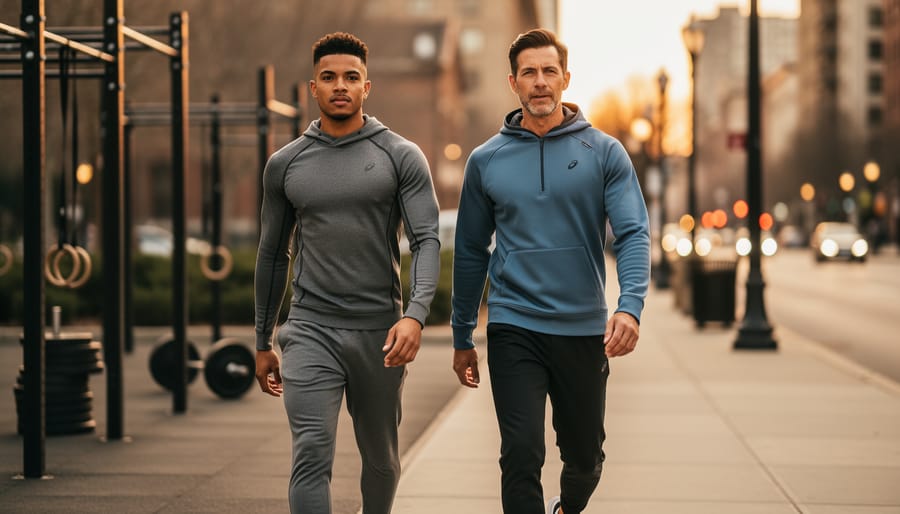
Perhaps most striking is how workout apparel shed its single-purpose identity. The rigid boundary between athletic wear and everyday clothing dissolved. Joggers with technical fabrication but tailored cuts work equally well for deadlifts and dinner. Training shirts feature clean, minimal designs that don’t scream “athletic brand logo.” This versatility matters because modern men’s lives don’t divide neatly into workout time and everything else. The apparel finally caught up to that reality.
Essential Workout Apparel Every Man Needs: A Comprehensive Buying Guide
Performance Tops: From Base Layers to Training Shirts
The right workout top transforms how your body regulates temperature and moves under load. Start with fabric: synthetic blends (polyester-spandex or nylon-elastane) dry fastest and cost less, making them ideal for high-sweat activities like HIIT or running. Merino wool offers natural odor resistance and works across wider temperature ranges, though it carries a premium price and requires more careful washing. Bamboo-blend fabrics feel softer against skin but typically retain more moisture than synthetics.
Compression tops apply consistent pressure that may reduce muscle vibration during explosive movements, which some weightlifters and sprinters prefer for proprioceptive feedback. They work best when sized precisely to your torso measurements. Relaxed-fit training shirts allow unrestricted range of motion for overhead work, making them better suited to Olympic lifting, yoga, and mobility-focused training where shoulder and arm freedom matters more than aerodynamic efficiency.
For running or cycling, prioritize moisture-wicking synthetics in a trim (not compressive) fit that eliminates excess fabric without restricting breathing. Weightlifting benefits from slightly looser cuts that don’t bind during bench press or overhead movements. Yoga and stretching demand four-way stretch fabrics with flatlock seams that won’t chafe during floor work.
Consider seam placement: raglan sleeves reduce underarm friction, while flatlock construction prevents the raised ridges that cause irritation during repetitive movement. Base layers should fit snugly without compression unless you specifically want that effect. Check the neckline, too. Crew necks stay in place better than V-necks during inverted movements.
Bottoms That Perform: Shorts, Tights, and Training Pants
Selecting the right workout bottoms demands attention to details that directly impact your movement and comfort. Short inseams typically range from 5 to 9 inches: taller men and those focused on running often prefer 7-inch inseams for adequate coverage without restriction, while weightlifters and CrossFit athletes gravitate toward 5-inch shorts that won’t interfere with deep squats or box jumps. Compression tights serve dual purposes as standalone bottoms for running and cycling or as base layers under shorts for cold-weather training, with the best versions featuring graduated compression that supports blood flow without constricting movement.
Waistband construction matters more than most men realize. Elastic waistbands with internal drawcords provide adjustability across weight fluctuations and prevent the annoying mid-workout slide that breaks your focus. Training pants and joggers designed for 2026 feature tapered legs that eliminate the baggy silhouette of earlier athleisure while maintaining full range of motion through articulated knees and gusseted crotches.
Pocket functionality separates thoughtful design from afterthought additions. Secure zipper pockets positioned at the sides or back keep phones and keys stable during intense movement, while mesh pocket bags reduce bulk and improve breathability. Hybrid shorts that transition from gym to errands combine performance fabrics with cleaner styling, often featuring hidden elastic waistbands that mimic casual shorts from the front.
Foundation Pieces: Underwear and Socks That Matter
Most men underestimate how much their underwear and socks affect workout performance. The wrong foundation pieces cause distractions, chafing, and blisters that derail otherwise solid training sessions.
Performance underwear has evolved beyond basic cotton briefs. Look for designs with anatomical pouch construction that provides support without compression, keeping everything in place during dynamic movements. Modern fabrics like modal blends and mesh panels offer superior breathability compared to traditional materials, while flat-seam construction eliminates the friction points that cause chafing during high-rep workouts or long runs. Brands now engineer underwear with moisture-wicking gussets and anti-microbial treatments that manage sweat and odor during intense sessions.
Technical athletic socks matter more than their price suggests. Quality pairs feature targeted cushioning zones under the heel and forefoot, arch compression bands that reduce fatigue, and seamless toe boxes that prevent blistering. Merino wool blends regulate temperature naturally, staying cool in summer and warm during outdoor winter training, while also resisting odor better than synthetics. Choose mid-crew or crew height for most activities; no-show socks work for casual gym sessions but expose your Achilles to friction during cardio.
Replace underwear every six months and socks when cushioning compresses or elasticity fails, typically after 40-50 washes.
Outerwear and Layering for All Conditions
Outdoor training demands outerwear that protects without compromising performance. A lightweight windbreaker blocks wind and light rain while maintaining breathability through vented panels or mesh-backed construction. Look for reflective details on shoulders, chest, and sleeves for early morning or evening runs.
Insulated jackets serve transitional weather better than heavy coats. Modern designs use synthetic insulation or down alternatives that maintain warmth even when damp, paired with moisture-wicking interior linings. Quarter-zip pullovers from the best men’s sweatshirt brands offer versatility for warm-ups and cool-downs without excessive bulk.
Vests deserve consideration for core warmth while preserving arm mobility during high-output activities like trail running or cycling. The key balance lies in choosing pieces with adequate ventilation, underarm zips, back vents, or breathable side panels, so you don’t overheat mid-workout yet remain protected from the elements. Packable designs that compress into their own pocket make it easy to carry extra layers for unpredictable conditions.
Specialty Items: Compression Gear, Recovery Wear, and Accessories
Compression gear and recovery wear have moved beyond professional athletics into mainstream workout wardrobes, but these specialty pieces demand careful consideration before you commit your budget. Compression sleeves, full-length recovery tights, and graduated compression socks all function by applying targeted pressure to improve blood flow, reduce muscle oscillation during training, and potentially accelerate post-workout recovery. The science supports their use for certain athletes, particularly those training at high intensity or volume, dealing with previous injuries, or competing in endurance events. For casual gym-goers hitting three 45-minute sessions weekly, the performance gains rarely justify the premium pricing.
- Measurable reduction in muscle soreness for high-volume training schedules
- Targeted support for previous injury sites without restricting movement
- Enhanced proprioception and joint awareness during complex lifts
- Temperature regulation features in premium recovery wear aid post-workout adaptation
- Price premium ranges from 2x to 4x standard workout apparel
- Requires precise sizing to deliver compression benefits without restricting circulation
- Performance benefits diminish significantly for recreational training intensity
- Limited versatility compared to standard gym wear
Accessories like cooling towels, moisture-wicking headbands, and training gloves address specific pain points rather than broad performance goals. A microfiber cooling towel that activates with water makes genuine sense for outdoor summer training or hot yoga practitioners. Headbands prevent sweat from compromising your vision during intense cardio. Weightlifting gloves protect your palms if calluses concern you, though experienced lifters typically prefer bare hands or chalk for better grip feedback. Invest in these items only after you’ve identified a concrete problem they solve in your actual training routine, not because they complete an aesthetic or suggest dedication you haven’t yet developed through consistent effort.
The Best Activewear Brands to Shop in 2026
The activewear landscape in 2026 offers more choice than ever, spanning heritage powerhouses, direct-to-consumer disruptors, and sustainability-focused innovators. Selecting brands that align with your training needs and budget requires understanding what each category does best.
**Heritage Performance Leaders**
Nike and Adidas remain dominant for good reason. Both brands continue refining proprietary fabrics, investing in athlete partnerships, and maintaining broad distribution. Nike excels in running and basketball apparel with responsive fabrics and strategic ventilation, while Adidas brings German engineering precision to everything from compression tights to weather-resistant jackets. Under Armour deserves mention for its compression technology heritage, though its market position has shifted toward team sports and outdoor training.
**Emerging Disruptors and Modern Essentials**
Gymshark has evolved from a scrappy UK startup into a global force, particularly strong in bodybuilding and weightlifting apparel with flattering cuts and community-driven design. According to GQ’s 2026 activewear brand guide, Rhone has carved out space in the premium segment with focus on fabric innovation and versatile designs that transition seamlessly from gym to daily wear. Vuori bridges the gap between performance and lifestyle with California-inspired athleisure that works for yoga, running, and weekend errands without looking overtly athletic.
**Luxury Activewear Options**
Lululemon has expanded its men’s offerings significantly, bringing the same attention to detail and fabric quality that built its reputation in women’s wear. Their ABC (Anti-Ball Crushing) pants remain category leaders for comfort. Arc’teryx and Outdoor Voices occupy the luxury space with different philosophies: Arc’teryx brings technical outdoor expertise to urban training, while Outdoor Voices emphasizes inclusive design and approachable fitness culture.
**Sustainable and Conscious Choices**
Patagonia applies its environmental ethos to activewear with recycled materials and transparent supply chains. Allbirds and Girlfriend Collective (which has expanded into men’s lines) prioritize carbon-neutral production and natural fibers. According to Vogue’s 2026 activewear overview, sustainability has shifted from niche concern to mainstream expectation, with most major brands now offering recycled polyester options.
**Budget-Conscious Quality**
Amazon’s own-brand performance wear and Target’s All in Motion line deliver surprising quality at accessible price points. Old Navy’s activewear division offers basics that perform well for casual gym-goers. These options work best for foundational pieces like basic tees and simple shorts where premium fabric technology offers diminishing returns.
Your ideal brand mix likely spans categories. Consider heritage brands for specialized performance needs, emerging brands for style-forward pieces, and budget options for high-turnover basics.
Matching Workout Apparel to Your Training Style
Your training style dictates which workout apparel will actually enhance performance rather than hinder it. Wearing compression tights to a hot yoga class or loose cotton tees for high-intensity intervals creates unnecessary discomfort and can compromise your workout quality.
| Training Style | Ideal Top | Ideal Bottom | Common Mistake |
|---|---|---|---|
| Strength Training | Fitted tank or crew neck | Flexible shorts or joggers | Wearing restrictive compression that limits range of motion |
| Running/Cardio | Lightweight mesh tee | Lined shorts with liner | Cotton fabrics that stay wet and cause chafing |
| Yoga/Flexibility | Soft, stretchy slim fit | Four-way stretch tights | Loose tops that ride up during inversions |
| Outdoor Sports | Moisture-wicking base layer | Weather-resistant pants | Skipping reflective elements for low-light conditions |
Strength training demands unrestricted movement through full ranges of motion. Choose tops with raglan sleeves or gusseted underarms, and bottoms with articulated knees and stretchy waistbands. The biggest mistake lifters make is wearing overly compressive gear that restricts proper form during squats and overhead movements.
Runners need maximum breathability and minimal weight. Prioritize mesh panels in high-sweat zones and seamless construction to prevent chafing during repetitive motion. Skip heavy fabrics and excessive pockets that bounce while you move.
Yoga and flexibility work requires four-way stretch fabrics that move with your body through complex positions. Fitted silhouettes prevent fabric bunching during inversions and floor work. Men often choose tops that are too loose, creating constant readjustment during practice.
Outdoor training introduces weather variables that demand layering capability. Base layers should manage moisture, mid-layers provide insulation, and outer shells block wind or rain. The most common error is overdressing, which leads to overheating and sweat saturation that turns cold once you stop moving.
Cross-training calls for versatile pieces that transition between activity types. Hybrid shorts with both stretch and structure work across multiple workout formats. Just as you develop a signature style for everyday wear, your gym wardrobe should reflect the specific demands of how you actually train rather than generic athletic aesthetics.
Smart Shopping: What to Prioritize and What to Skip
Your workout wardrobe investment should follow a clear hierarchy: spend on what touches your skin and supports your body, save on what covers the basics.
**Where Premium Pricing Pays Off**
Base layers deserve your budget. Quality merino wool or advanced synthetic blends regulate temperature, prevent chafing, and withstand hundreds of washes without losing shape. A $60 base layer worn twice weekly for two years costs roughly 30 cents per wear. Performance underwear with pouch construction and anti-chafing seams similarly transforms comfort during intense training sessions.
Compression gear earns its premium when you’re recovering from heavy lifts or long runs. The graduated compression technology in reputable brands actually aids circulation and reduces muscle fatigue, unlike cheaper imitations that simply squeeze.
Proper athletic footwear remains non-negotiable. Your knees, ankles, and lower back depend on adequate cushioning and support during high-impact activities.
**Acceptable Budget Options**
Basic cotton-blend training tees and simple gym shorts work perfectly for casual workouts. Unless you’re training for competition or spending hours in the gym daily, mid-tier options from mainstream brands deliver adequate moisture-wicking and durability at half the cost of premium labels.
Accessories like headbands, simple caps, and standard gym bags don’t require specialty pricing. The same goes for basic recovery tools and grooming essentials; just as you don’t need expensive products to reduce shaving irritation with proper technique, you don’t need premium pricing for straightforward workout accessories.
**Building Your Wardrobe Strategically**
Start with three quality base layers, two pairs of versatile bottoms, and proper footwear. Add pieces as your training intensifies rather than buying a complete wardrobe upfront. Seasoned athletes should replace compression gear and base layers annually, but outerwear and casual training pieces can last three to five years with proper care.
The five-year leap in men’s workout apparel technology and design philosophy has fundamentally transformed how we approach fitness. What began as a purely functional category has evolved into a sophisticated intersection of performance engineering, sustainable manufacturing, and versatile style that respects your time and investment.
Choosing the right workout gear isn’t vanity. It directly impacts your training effectiveness, recovery quality, and willingness to show up consistently. The difference between generic cotton basics and thoughtfully designed performance pieces shapes whether exercise feels like a chore or a practice you genuinely want to maintain.
As you build or refresh your workout wardrobe in 2026, prioritize quality over quantity. Invest in foundational pieces that genuinely serve your training style rather than chasing every trend. A well-curated rotation of properly fitting, activity-appropriate gear will outlast and outperform a drawer stuffed with cheap basics that lose shape after a dozen washes.
The activewear industry shows no signs of slowing its innovation pace, with body-responsive fabrics and hybrid designs continuing to blur the boundaries between athletic and everyday wear. Much like investing in the best male grooming stores or researching top hair styling products selecting proper workout apparel is a commitment to presenting your best self across all aspects of life. Your gym wardrobe deserves the same intentional curation as any other element of a well-rounded lifestyle.