

The Quiet Habits Behind Lasting Health and Wellness for Men
Men’s health comes down to five habits done consistently: regular strength and cardio training, a diet built on whole foods, seven to nine hours of sleep, honest attention to mental health, and routine check-ups before anything feels wrong. None of it is complicated. Most of it is simply easy to postpone.
That’s the real problem. Men tend to treat their health like a car that only needs a mechanic once it stalls, and the numbers show the cost of that approach. Heart disease, type 2 diabetes and several cancers are far easier to manage when caught early, yet many men go years without a blood pressure reading or a conversation with a doctor.
This guide covers each pillar in practical terms: how much exercise is enough, what to eat and what to cut back on, how to fix poor sleep, when stress becomes something worth addressing, and which screenings matter at which stage of life. We also look at grooming and tobacco, two areas that quietly shape both appearance and long-term health. Looking after yourself is part of a refined personal style and it starts well before the mirror. Treat what follows as a general framework, and bring your own history to a qualified doctor.
Why Men’s Wellness Deserves a Smarter Approach
Men’s health gets less attention than it should, and that has little to do with toughness or pride. It comes down to habit. Across many countries, men are less likely than women to book routine appointments, more likely to wait until a symptom becomes hard to ignore, and often slower to mention concerns that feel minor. None of this is a character flaw. It’s a pattern, and patterns can be changed once you see them.
The cost of waiting is rarely dramatic at first. Blood pressure creeps up without any warning signs. Cholesterol and blood sugar drift quietly. A persistent ache gets labelled “just age.” By the time something forces a visit, the problem is often harder to manage than it needed to be. Catching a concern early usually means simpler options, shorter recovery, and fewer disruptions to the life you’ve built.
That’s why a smarter approach matters. It means treating your health the way you’d treat any asset worth protecting: with regular maintenance rather than emergency repairs. A short annual conversation with a doctor, a few honest questions about sleep, stress, and energy, and small adjustments made early cost far less than a crisis does later.
There’s also a practical upside beyond avoiding illness. The same habits that protect long-term health tend to sharpen how you look, feel, and perform day to day: steadier energy, clearer focus, better posture, more resilience under pressure. These benefits matter at thirty as much as at sixty. Wellness isn’t a reward for reaching a certain age or a response to a scare. It’s a standing investment, and the earlier you start, the more it returns.
Movement That Fits a Real Life

Strength: The Foundation of Healthy Ageing
Muscle is easy to lose and hard to win back, which is why strength work earns a place in every man’s routine, whatever his age. Research on resistance training benefits points to better muscle maintenance, stronger bones, and improved metabolic health. It also supports the posture that keeps a suit hanging well.
The goal isn’t the heaviest bar in the room. Learn the movement with light loads, keep your form clean, then add weight or repetitions in small, steady steps. Returning after a break? Start lighter than your ego suggests.
A simple weekly framework looks like this, though individual needs vary:
| Type of exercise | General purpose | Suggested frequency |
|---|---|---|
| Strength training | Muscle, bone health, posture | 2 to 3 sessions |
| Cardio | Heart health, stamina | 2 to 4 sessions |
| Mobility work | Joint care, flexibility | Short daily sessions |
Consistency, not intensity, is what compounds over the years.
Cardio and Mobility Without the Burnout
Not every session needs to leave you flattened. Walking, cycling, and swimming are easy to sustain, and the evidence on how physical activity benefits adults is strongest for regular, moderate effort. Cycle part of your commute, take calls on foot, or swim twice a week before the day gets away from you.
Add intervals once or twice a week if you want more from less time. Try a hard minute followed by two easy ones, repeated for twenty minutes. Keep the rest of your cardio conversational.
Mobility is what keeps all of it going. Five to ten minutes of hip, shoulder, and spine work after a long day at a desk protects your joints and eases stiffness. Anchor it to something you already do, like the evening news or brushing your teeth. Consistency beats intensity every time.
Starting Again After a Long Break
If it has been months or years since you trained regularly, the biggest mistake is trying to pick up where you left off. Your motivation may be back at full strength, but your tendons, joints, and cardiovascular system need time to catch up. Start with about half of what feels manageable: two or three short sessions a week, built around walking, light resistance work, and easy mobility. Add a little more each week, and let a day of rest sit between harder efforts.
Expect some soreness and let it guide the pace. Sharp pain, dizziness, or unusual breathlessness is a signal to stop, not push through.
If you have a heart condition, high blood pressure, diabetes, a past injury, or you’re simply over 40 and haven’t been active in a long while, speak to your doctor before you begin. That conversation takes ten minutes and can shape a safer, smarter plan. Consistency over the first three months matters far more than intensity in the first three weeks.
Eating Well Without Making It a Project
Building a Balanced Plate
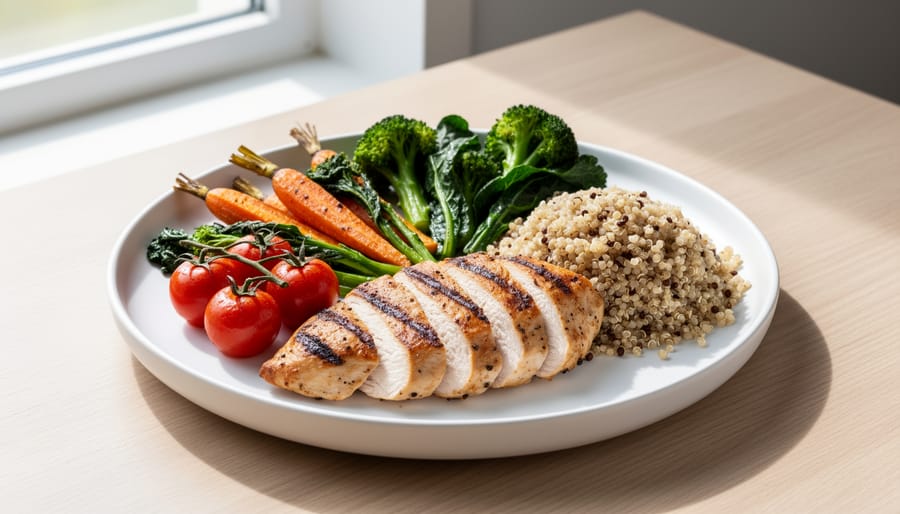
A good plate doesn’t need a spreadsheet. Think in proportions instead: roughly a quarter protein, a quarter whole grains or starchy carbohydrates, and the rest vegetables, finished with a modest amount of healthy fat. That framework works at a desk lunch, a dinner out, or a quick breakfast at home.
Quality does more work than quantity here. A well-cooked piece of salmon, a handful of roasted seasonal vegetables, and a spoonful of good olive oil will satisfy you more than a larger portion of something forgettable. Eating well is meant to be enjoyable, and a meal you actually look forward to is one you’ll keep making.
A few principles keep the structure simple:
- Build each meal around a protein source such as fish, eggs, poultry, lean meat, or legumes.
- Add at least one vegetable to every meal, ideally in more than one colour.
- Choose whole grains like oats, brown rice, or wholemeal bread over refined versions.
- Pick quality ingredients over larger portions, and cook them simply.
- Keep alcohol moderate and treat it as part of the meal, not an automatic extra.
You don’t need to follow these perfectly. Aim for the pattern across most of your week, and let the occasional indulgence be exactly that.
Alcohol, Caffeine, and the Habits Worth Reviewing
Most men have a few daily habits that run on autopilot: the second coffee at 3 p.m., the glass of wine that turns into two, the nightcap that makes falling asleep feel easier. None of these are scandalous. They are simply worth looking at with a clear head.
Start with a short audit. For one week, note what you drink, when, and how you feel the following morning. Patterns tend to appear quickly. Caffeine late in the day can linger for hours and quietly erode sleep quality, even if you drift off without trouble. Alcohol may help you feel drowsy, but it often fragments sleep and leaves you flatter, foggier, and less motivated to train the next day.
The long view matters too. Regular heavy drinking is linked with raised blood pressure, liver strain, and weight gain, while keeping intake modest protects both energy and recovery. Rather than aiming for perfection, aim for intention. Set alcohol-free days, choose quality over quantity, and push your last coffee earlier.
For specifics, follow the guidance of your national health authority on weekly alcohol limits, since recommendations differ by country. If you suspect your habits have slipped beyond what feels comfortable, a conversation with your doctor is a sensible, confidential next step.
Sleep: The Most Underrated Part of Your Routine

Sleep rarely gets the credit it deserves. It shapes how much energy you have at 3 p.m., how patient you are in a tense meeting, and how sharp your thinking feels when decisions pile up. It also shows on your face: puffy eyes, dull skin and a drawn look tend to follow a few short nights. And it’s when your body does its repair work, rebuilding muscle after training and consolidating what you learned that day. Research on the sleep and recovery link reinforces what most active men notice for themselves: train hard on poor sleep and you recover more slowly.
The good news is that better sleep comes from a handful of repeatable habits rather than a complicated overhaul. Think of the hour before bed as a runway, and build it in this order:
- Pick a bedtime and a wake time you can hold within about thirty minutes, including weekends. A steady schedule does more than any gadget.
- Stop caffeine by early afternoon. Its effects linger for hours, so that late coffee is still working when you’re trying to switch off.
- Finish your last substantial meal two to three hours before bed, and keep alcohol modest. A nightcap may help you drop off, but it tends to fragment sleep later in the night.
- Dim the lights around you an hour out, and put work email away. Close the laptop and leave it in another room if you can.
- Put screens down thirty to sixty minutes before sleep. Read, stretch, or have a quiet conversation instead.
- Take a warm shower or bath, which helps your body temperature drop afterwards and signals that the day is over.
Your bedroom matters just as much as your routine. Aim for a room that’s cool, dark and quiet, with blackout curtains or an eye mask and a mattress and pillow that suit how you actually sleep. Keep the phone off the bedside table, or at least face down and silenced.
If you snore heavily, wake unrefreshed despite a full night, or feel exhausted through the day, mention it to your doctor. Those can be signs of a sleep disorder that habits alone won’t fix.
Mental Wellbeing and the Pressure to Cope Alone
Managing Stress Before It Manages You
Stress rarely arrives as a single dramatic event. It builds quietly, through late emails, skipped lunches and evenings spent half-present, until it starts shaping your mood, sleep and patience. The most effective tools are small and repeatable.
Start with time outdoors. Even twenty minutes of walking in daylight, ideally without your phone, can lower tension and reset your focus between demanding tasks. It works best as a fixed habit rather than a reward you earn after the work is done.
Breathing is the fastest reset you carry with you. Try inhaling for four counts and exhaling for six, repeated for a couple of minutes. The longer exhale nudges your body out of its alert state, which makes it useful before a difficult meeting or when you notice your jaw clenching.
Boundaries matter just as much. Decide when your working day ends, and protect that line. Silence notifications after a set hour, and treat your evening as non-negotiable.
Finally, choose hobbies that genuinely absorb you, whether it’s cooking, woodworking, cycling or learning an instrument. Real recovery comes from activities with no metrics or audience, only your attention.
The Value of Connection
Strong relationships do quiet, measurable work for your health. Men with a solid circle of friends and family tend to cope better with stress, recover more readily from setbacks, and report greater satisfaction with their lives. The trouble is that connection rarely survives on good intentions alone. Careers expand, families grow, and the friends who once saw you weekly become people you mean to call.
The fix is to make contact routine rather than occasional. Put a standing arrangement in the calendar: a monthly dinner, a Saturday morning run, a regular round of golf. Shared activity often makes conversation easier than sitting face to face, and it gives the friendship a rhythm that doesn’t depend on anyone remembering to organise it.
During demanding stretches, shrink the gesture rather than abandon it. A short voice note, a quick call during the commute, or a message that simply says you were thinking of them keeps the bond warm.
Community matters too. A local club, a volunteering role, or a team sport widens your circle and gives you a sense of belonging beyond work. Reach out first. Most people are quietly hoping someone will.
Preventive Care: Check-Ups Worth Keeping

Most men don’t skip check-ups because they’re careless. They skip them because nothing hurts, the calendar is full, and “I feel fine” is a convincing argument. The trouble is that several of the conditions worth catching early, including high blood pressure, raised cholesterol and elevated blood sugar, tend to be silent. A routine appointment is often the only way they surface.
A good starting point is a conversation with your doctor about what makes sense for you. Men commonly discuss a handful of categories: blood pressure, cholesterol, blood sugar, skin checks for unusual or changing moles, and screenings that become relevant with age. Which ones you need, and how often, depends on your age, family history, lifestyle and where you live, so treat any general list as a prompt for discussion rather than a schedule. Bringing a short note of family health history and any changes you’ve noticed makes the appointment far more useful.
On tobacco, the advice is simple and has stayed consistent for years: avoiding it is one of the most effective things you can do for your long-term health, and quitting brings benefits at any age. Many people find it takes more than one attempt, which is normal rather than a failure. A doctor or local health service can outline the support available.
How often should I see a doctor if I feel fine?
There’s no single answer, as it varies with age, health history and local guidance. Ask your own healthcare provider what routine schedule suits you, and keep to it even when nothing feels wrong.
When should I get a skin check?
Book one promptly if you notice a mole or mark that changes in size, shape or colour, or one that bleeds or won’t heal. For routine checks, your doctor can advise on timing based on your skin type, sun exposure and family history.
What support exists for quitting smoking?
Options typically include counselling, support programmes and approved cessation aids. Your doctor or pharmacist can explain what’s available in your area and help you choose an approach.
None of this requires a dramatic overhaul. Putting one overdue appointment in the diary this month is a small step that pays off for years.
Looking After the Outside, Too
Grooming isn’t vanity. It’s the visible end of habits that start well below the surface, and the two tend to move together.
Skincare doesn’t need a ten-step routine. A gentle cleanser, a moisturiser suited to your skin type, and consistency will do more than any shelf of products. Shaving is a good place to pay attention: a sharp blade, a proper lather, and a calming aftershave balm cut down on irritation and ingrown hairs.
Sun protection deserves a permanent spot in the morning routine. A broad-spectrum SPF worn daily protects against premature ageing and supports skin health over the long term. Pair it with regular skin checks, and see a doctor about any mole or mark that changes.
Dental care is just as telling. Brushing twice a day, cleaning between your teeth, and keeping up with dental appointments protects your gums, your breath, and your smile.
Hair belongs in the conversation too. If you’re dealing with styling for thinning hair the right approach keeps things looking natural and deliberate. And if you’re unsure how to choose a hair product start with your hair type and the finish you want.
Men often find that confidence from grooming follows naturally once the basics are in order. It helps to pick the right product once and stick with it, rather than chasing every trend.
Lasting health rarely arrives through a dramatic overhaul. It builds quietly, through the small choices you repeat: the walk you take at lunch, the extra glass of water, the earlier night, the conversation you stop putting off. None of these feels impressive on its own, but together they shape how you look, how you think, and how well you function at forty, fifty, and beyond.
You don’t need to change everything at once. Pick one or two habits that suit your current life and give them a few weeks to settle. Once they feel automatic, add another. Progress built this way tends to hold.
If a check-up is overdue, book it this week. It’s one of the simplest and most useful things you can do for yourself.
Treat your wellbeing the way you treat everything else you take seriously: with intention, consistency, and a long view. A well-lived life starts with a well-kept body and mind. Begin today.