
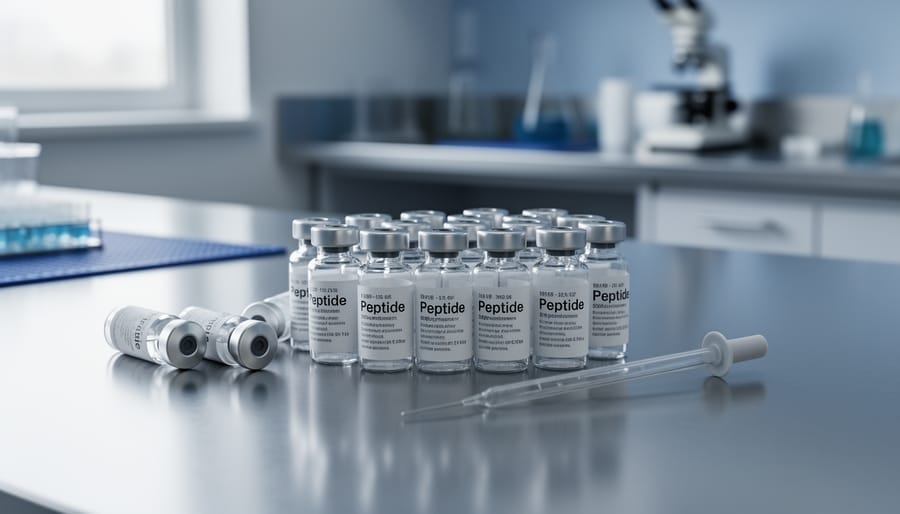
What Does Research Use Only Mean for Peptide Products?
“Research use only” (RUO) is a label meaning a peptide product is sold for laboratory investigation, not for human or animal consumption, and not as a medicine, supplement, or treatment. It signals that the product hasn’t been evaluated or approved by a regulator for any therapeutic purpose.
That distinction matters more than the small print suggests. Suppliers such as Kylo operate in this category, and understanding what the label does and doesn’t promise helps you read a product page like a professional rather than a casual browser. An RUO peptide isn’t an approved drug. It isn’t a pharmacy-prepared compounded preparation either, and it doesn’t carry the oversight that comes with either route.
So what does the label tell you about quality, safety, and legality? Less than many buyers assume, and in some respects more. This article defines the term plainly, explains how the category works in practice, and separates RUO from approved and compounded products. Nothing here is medical advice. Questions about your own health belong with a licensed professional.
What the ‘Research Use Only’ Label Actually Means
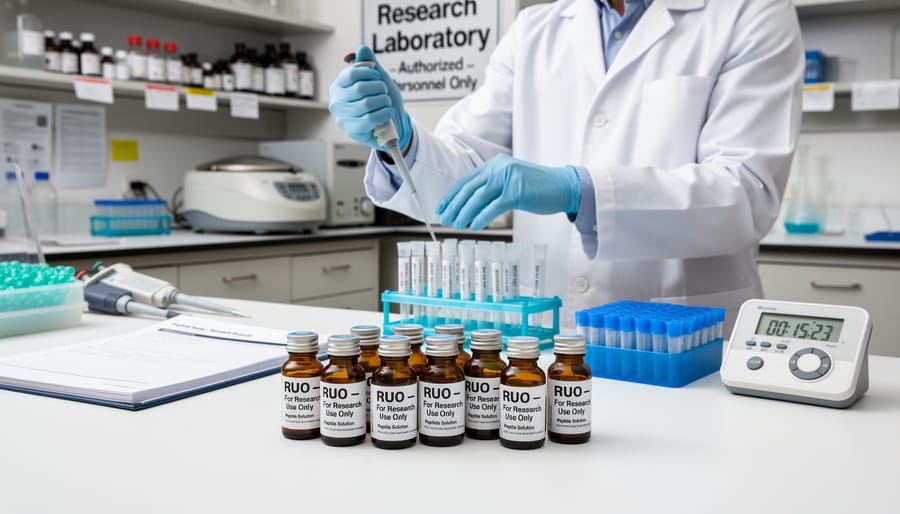
Peptides in Brief: Why They Draw Attention
Peptides are short chains of amino acids, the same building blocks that make up proteins, just in smaller strands. In the body, many of them work as signaling molecules, carrying instructions between cells that influence processes like growth, metabolism, and tissue repair. Some well-known examples, such as insulin, are peptides that have been studied for decades and are approved for specific medical uses.
So why the sudden attention? Men’s health, fitness, and recovery conversations have drifted toward anything that sounds like it could help the body repair, adapt, or age more gracefully. Peptides get mentioned in gym forums, podcasts, and wellness clinics, often with more enthusiasm than evidence. That gap is exactly where confusion about labels like “research use only” begins.
Before going further, a few terms are worth getting straight:
- Research use only (RUO)
- A label indicating a product is sold for laboratory investigation, not for human or animal consumption.
- Peptide
- A short chain of amino acids that can act as a signaling molecule in the body.
- FDA-approved drug
- A medication that has been reviewed by the FDA for safety, effectiveness, and manufacturing quality for a specific use.
- Compounded medication
- A custom preparation made by a licensed pharmacy for an individual patient, under a prescriber’s direction.
- Dietary supplement
- An ingestible product regulated as food rather than as a drug, which cannot claim to treat or cure disease.
- Certificate of analysis
- A document from a lab reporting the test results for a specific batch, such as identity and purity.
Keep these distinctions in mind. They explain why two products with similar-sounding names can sit in entirely different regulatory worlds.
How the RUO Category Works in Practice
In a legitimate setting, research use only products move through a fairly narrow channel. The typical buyers are university laboratories, academic researchers, contract research organizations, and biotech firms running cell-based assays or early-stage experiments. These buyers understand what they are getting: a reagent meant for study, not a finished product meant for a person.
That context shapes how an RUO peptide is presented. Listings tend to share a recognizable pattern:
- A “not for human consumption” or “for laboratory use only” disclaimer on the label and product page.
- No dosing instructions, administration guidance, or directions for use.
- No claims about approved uses, treatment, or health outcomes.
- Lyophilized (freeze-dried) powder in a sealed vial, shipped as a raw material.
- Sales aimed at labs, institutions, or qualified buyers rather than the general public.
Oversight is where RUO differs most from approved medicines. A prescription drug goes through clinical trials, manufacturing inspections, and ongoing safety monitoring before it reaches a patient. A genuine RUO reagent sits outside that pathway because it is not meant for human use, so it is not held to the same purity, sterility, or dosing standards.
Regulators such as the FDA generally look at intended use rather than the wording on a label. If a product is truly sold for lab work, it stays in the research category. If it is marketed, priced, or described in ways that point to human use, it can be treated as an unapproved drug no matter what the disclaimer says.
That distinction is exactly where the label gets abused. Some sellers attach a small “research only” notice to a product while the surrounding marketing, such as testimonials, benefit language, or suggested protocols, speaks directly to consumers. The disclaimer becomes a wink and a nod rather than an honest description of purpose. For a reader, the practical takeaway is simple: the presence of an RUO label tells you how a seller wants to be classified, not that the product is safe, tested, or legitimate.
Peptide Product Categories and Where RUO Fits In

Not every peptide product on the market is the same kind of thing. The label on the vial tells you which category you’re dealing with, and that category determines almost everything else: how it was made, who checked it, and who answers if something goes wrong.
Here are the four categories you’re likely to encounter:
- Prescription peptide medications: approved by regulators for specific conditions and prescribed by a physician to patients.
- Compounded peptides: prepared by a licensed pharmacy for an individual patient under a clinician’s oversight.
- Over-the-counter supplement ingredients: sold to consumers as dietary products, typically amino acid blends or collagen-type ingredients, with limited claims allowed.
- Research use only (RUO) compounds: sold to laboratories for scientific study, not for human or animal use.
The standards separating these groups are wide. An approved medication has been through clinical trials, manufacturing inspections, and strict labeling requirements. A compounded preparation sits in a narrower regulatory space, but it is still made by a licensed pharmacy and ordered by a prescriber who knows the patient. Supplements face lighter oversight, though they are still sold for human consumption and must be labeled that way.
RUO sits at the far end of that spectrum. It has no approved human use, no clinician in the loop, and no promise that the product meets pharmaceutical standards for purity or sterility. Accountability, in the medical sense, is largely absent. That gap is the point of the designation, and it’s why the category matters more than the compound’s name.
What RUO Means for Quality, Safety, and Legality

For a consumer, the practical meaning of RUO is straightforward: the product sits outside the systems that exist to protect people who take medicines. Pharmaceutical-grade drugs are made under strict manufacturing rules covering purity, sterility, and dose consistency, with each batch tested against defined specifications. RUO products are generally not held to those standards, because they are not meant to be consumed. A vial may contain more or less than the label states, and it may carry contaminants or lack the sterile conditions that matter for anything injected.
There is also the question of evaluation. A compound sold for research has not been assessed for safe use in people, so there is no established dosing, no reviewed safety profile, and no formal process for tracking side effects. Calling a product “research use only” does not make personal use legal, and it does not make it safe. It simply states the seller’s intended customer, and the disclaimer can be at odds with how the product is actually marketed.
Many sellers publish a certificate of analysis, or COA, and it can look reassuring. In a laboratory it is a useful document, typically reporting purity and identity for a specific sample. But a COA is not regulatory approval. It may come from a lab the seller chose, it may not reflect the vial you receive, and it says nothing about sterility, long-term safety, or whether the compound does what is claimed. It describes a product, not a verdict on it.
None of this is meant to alarm. It is meant to show where the guardrails are and where they are absent. If you are curious about peptide-related therapies, the sensible first step is a conversation with a licensed physician, who can discuss approved options and whether any of them fit your situation.
Questions Men Ask About RUO Peptides
Most of the confusion around this label comes down to a handful of recurring questions. Here are the clearest answers, followed by some practical next steps.
Is “research use only” the same as “not tested”?
Not exactly. An RUO product may have undergone some analytical testing for lab purposes, but it has not been evaluated by a regulator for safety or effectiveness in people. The label describes intended use, not the absence of any testing.
Does a certificate of analysis mean a product is safe?
No. A certificate of analysis reports what was measured in a given batch, such as purity or identity. It is not regulatory approval, and it says nothing about safety for human use.
Why do some sellers use the RUO label on products aimed at consumers?
The label can act as a legal shield, letting a seller market a compound while disclaiming any human use. When the marketing, dosing talk, or packaging points at everyday consumers, treat that disclaimer with skepticism.
What are safer routes to explore peptide therapy?
Start with a licensed physician who can discuss approved prescription options and, where appropriate, clinician-supervised compounded preparations. They can also tell you honestly when a trend lacks solid evidence.
If your real goal is better wellness or performance, it helps to widen the lens beyond peptides altogether. Men dealing with sexual health concerns, for instance, often find that a regulated digital ED clinic offers a more accountable starting point than any unregulated compound. Those curious about non-drug options can learn how to use shockwave safely while a clear overview of treatment pathways shows what is realistically on the table.
Everyday habits matter too. Building a diet around evidence-based foods is a low-risk way to support long-term health while you sort out the bigger questions with a professional.
“Research use only” is a statement about intended purpose: the product is sold for laboratory work, not for people or animals. It says nothing about whether the compound is pure, safe, or approved, and it should never be read as a quiet endorsement.
For a man weighing the latest recovery or longevity trend, that distinction is the whole point. Curiosity is healthy. Skepticism is healthier. Before putting any peptide into your routine, talk to a licensed physician who can look at your health, your goals, and what options are properly regulated. The smartest move is rarely the newest one.